
Squat
- What it tests
- Squat pattern, depth and trunk position across repetitions.
QOOM measures standardized movement tests from two phone cameras. Squat, countermovement jump, drop jump, single-leg hop, change of direction and treadmill gait — captured from two angles and turned into biomechanical metrics, normative zones and a report.
No force plates. No lab. No markers. The two cameras are stereo-calibrated once before the first capture.
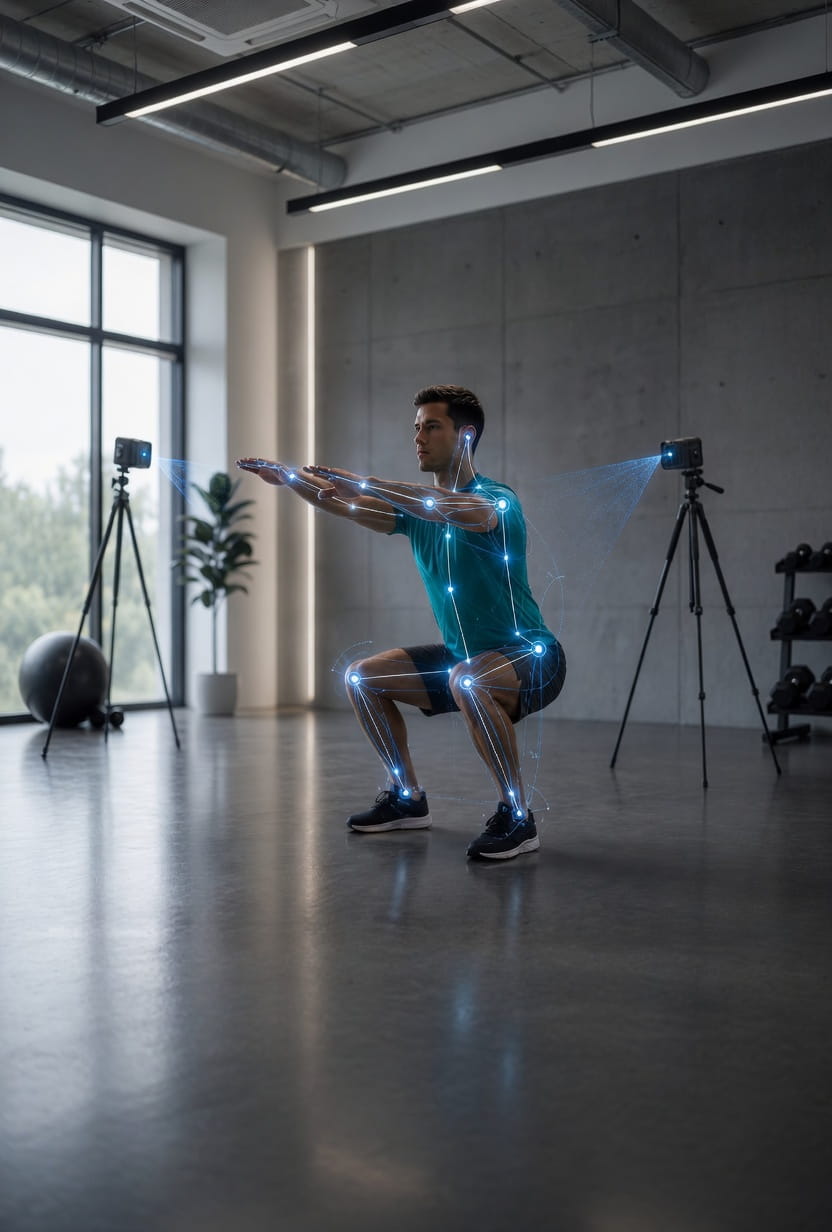
Eight assessments are production-ready today. Each is captured from two angles and returns the same shape of output: biomechanical metrics, normative zones where the reference data supports one, and a shareable report.
One loop, run the same way every time, so two sessions can be compared.
Two calibrated phone cameras record the assessment from two angles. Markerless — nothing is attached to the athlete.
Pose estimation and biomechanical analysis produce the metrics defined for that assessment, with quality checks on the capture itself.
Metrics are graded against the reference data declared for them, surfacing focus areas and left/right differences.
Run the same assessment again later and compare. Reassessment timing comes from the metrics that produced the finding.
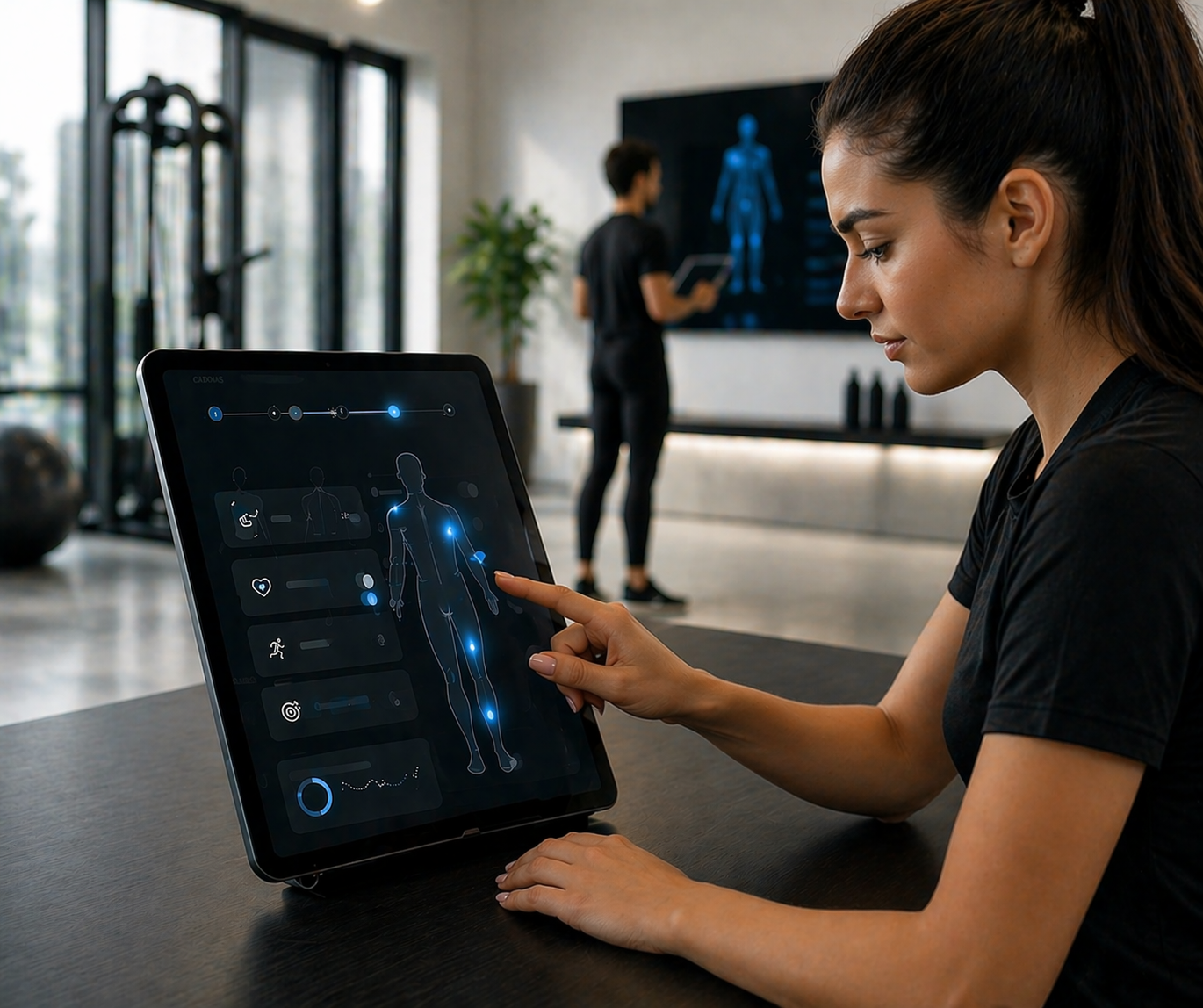
Every threshold declares its source type, and QOOM can withhold a grade when the available evidence does not support one.
Every graded metric carries its standing. A verdict that cannot rest on the evidence available today is shown as provisional, never as validated.
Grades are re-checked against the current reference registry at the moment they are displayed, not only when the trial was analysed. A verdict that no longer holds is withheld instead of shown.
Pose confidence, occlusion and event-detection checks run on every capture. A trial that fails them is marked partial or blocked rather than scored.
Reference distributions live in a versioned registry that records where each one came from and how far it can be trusted.
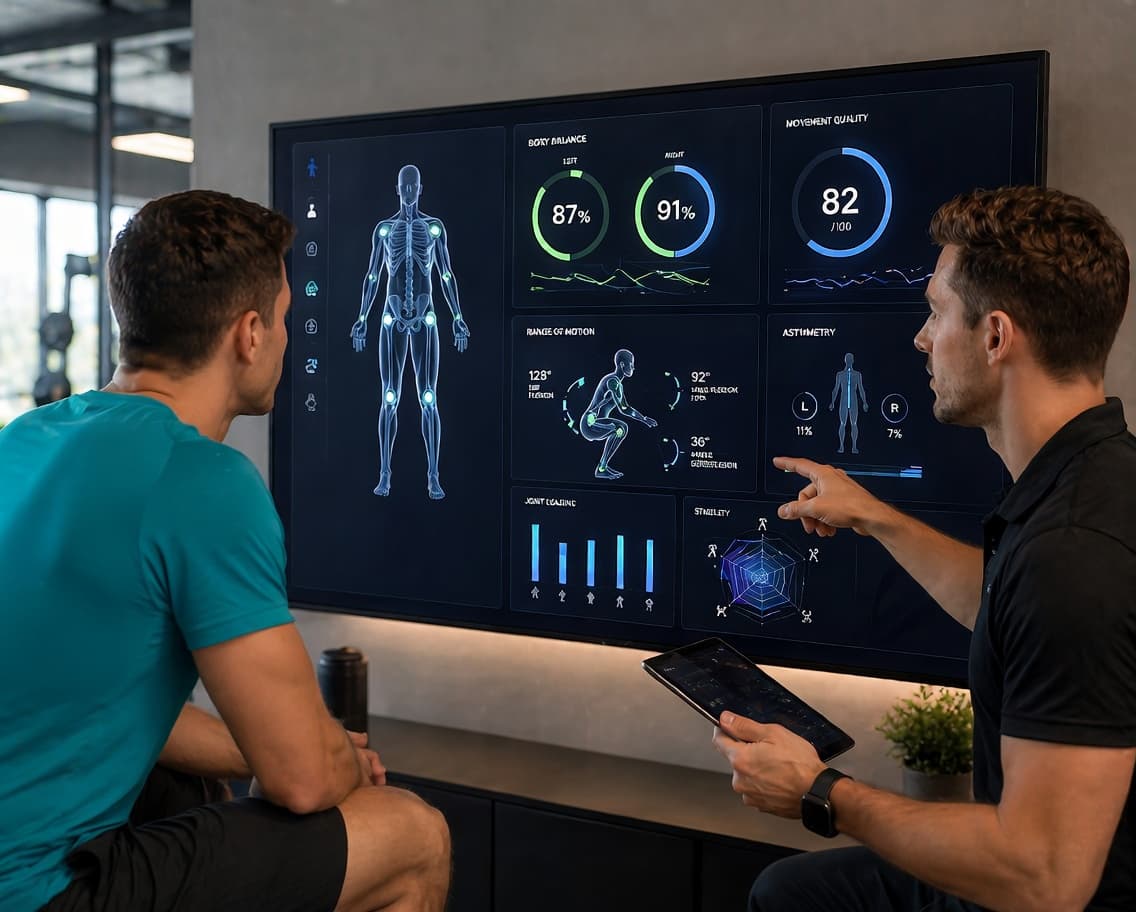
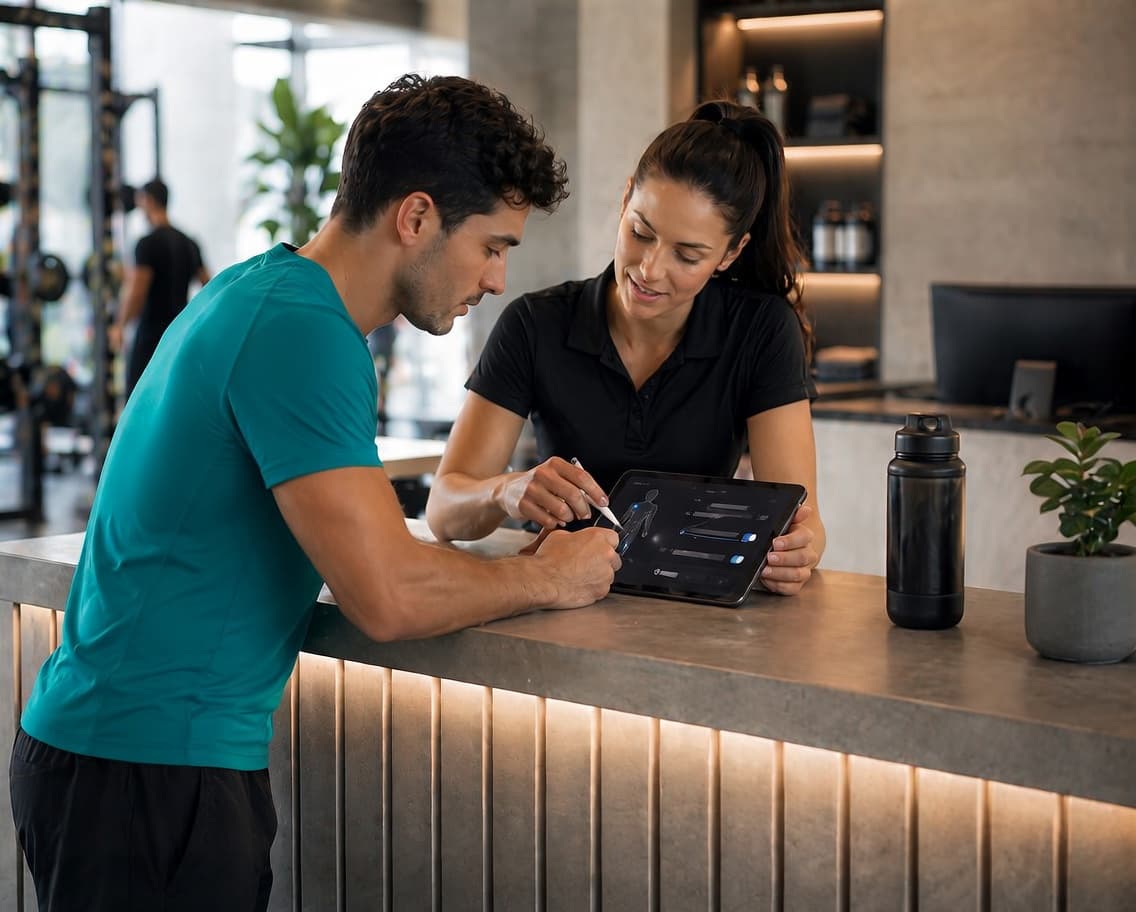
Every completed analysis updates a per-athlete profile, so the picture of how someone moves fills out as more assessments are captured.
Anything without enough behind it yet says so, rather than showing a number.
The same assessments and the same outputs, whoever is running them.
Start with one assessment and a pair of phones.